MILVUS

DOOR 4.0
January 8, 2021
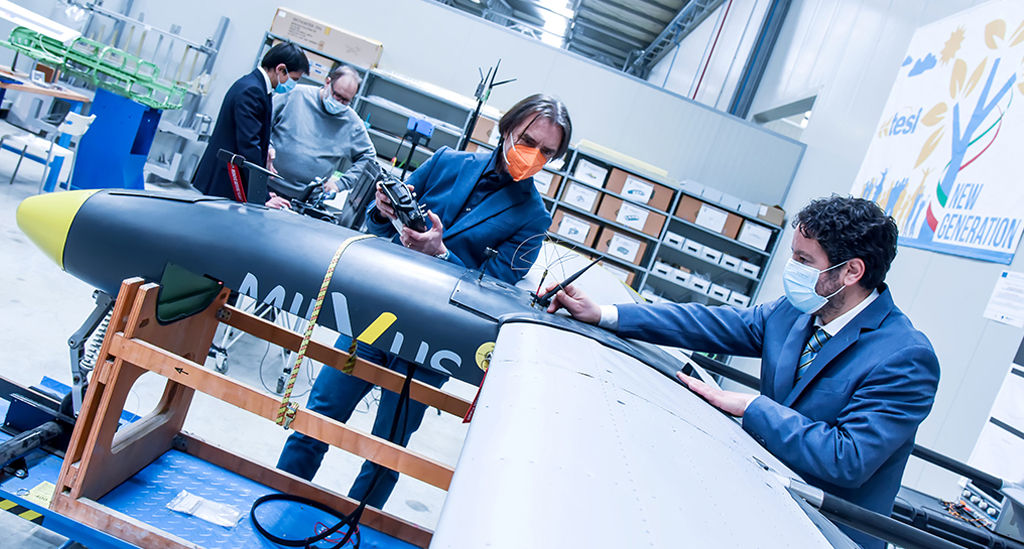
engThanks to the “Programma Quadro di Ricerca e Innovazione dell’Unione Europea HORIZON 2020 PON 2014-2020 Asse 1 Priorità di investimento 1.b Azione 1.1.3 LDR DM MISE 1/6/2016”, in reference to the announcement of “Ministero dello Sviluppo Economico Divisione VII per progetti di R&S negli ambiti tecnologici di HORIZON 2020-BANDO PON-I&C204-2020”, TESI has designed and built the RPAS (Remotely Piloted Aircraft System) MILVUS.
At TESI, we work thinking about the future and the necessity of society, businesses and public administrations. That’s how, from our experience and our ability to create innovative projects, MILVUS is born: a latest generation drone with LIDAR technology that adapts to multiple fields of application.
The products obtained from the LIDAR surveys provide fundamental information to accurately represent the morphology of the hydrogeological hazard areas; these surveys constitute a basic support for hydraulic and hydrological modeling activities, to define the perimeter of the areas of potential flooding of the main waterways, and to identify the areas most exposed to danger in the event of flood events.
This UAV is a tool of fundamental importance for everyone's safety and work thanks to its use in forestry, roadways and in the general design of public works, for accurate surveys of the territory at low altitude and low speed, for territorial and marine surveillance, for the transport of special loads such as, for example, medicines, spare parts and supplies.
![poster1[1]](https://www.aeronet.it/wp-content/uploads/2014/05/poster11.jpg)
![milvus21[1]](https://www.aeronet.it/wp-content/uploads/2021/01/milvus211.jpg)
TECHNICAL FEATURES
Apertura alare: 4.8 m
Corda alare: 0.682 m
Superficie alare: 3.27 m2
Carico Alare: 19.87 kg/m2
Allungamento alare: 7.04
Rapporto di rastremazione: 1.0
Diedro trasversale: 1°
Alettoni su 20° giù 15°
Equilibratore su 25° giù 15°
Timoni dx 25° sx 25°
Flaps 0° -40°
Tipo di motore: Elettrico Brushless
Potenza massima: 9,5 kW
Numero di pale: 2 in legno
Diametro / passo: 28’’ / 12’’
Tipo: passo fisso
Peso massimo al decollo: 65 kg
Peso minimo al decollo: 45 kg
Carico Pagante: max. 20 kg
Limite anteriore: 25% CMA
Limite posteriore: 33% CMA
Corsa Decollo (Ostacolo 15 m): 110 m
Corsa Atterraggio (Ostacolo 15 m): 180 m
Velocità di Stallo (VS): 54 Km/h
Velocità Max di Progetto (VD): 160 Km/h
Velocità Missione LIDAR: 65 Km/h
Quota lavoro: 60 m
Velocità Missione Sorveglianza: 85 Km/h
Quota lavoro: 450 m
Autonomia di Lavoro:
Min. (1 Pacco batteria) 1 h
Max. (2 Pacchi batteria) 2 h
FLIGHT MANAGEMENT SYSTEM
- GPS
- Piattaforme Inerziali
- Sensori Barometrici
- Tubo di Pito
- Altimetro Laser
- 2 Telemetria in ridondanza a lungo raggio
- 1 video-link per gestione volo
- 1 video-link per telecamera gimbal
- 2 Canali radio per gestione volo
- 1 fissa a prua di pilotaggio
- 1 zoom 18x gimbal autostabilizzata nel cargo bay
- Cloche di comando Motore e Superfici di Controllo
- 2 Monitor
- Software di Pianificazione, Gestione e Monitoraggio
- 2 Antenne Telemetria
- 2 Antenne Video link
- 2 Radiocomandi per Gestione Manuale Volo in ridondanza sul corto raggio
- 2 servo Flaps
- 2 servo Alettoni
- 2 servo Equilibratori
- 2 servo Timoni
- 1 servo Sterzo
La macchina in questione, dispone di un ampio vano di carico, nella parte inferiore della fusoliera, atta a contenere una ampia varietà di carichi paganti fino a circa 20 Kg come illustrato nella foto seguente.