


SPACE

DOOR 4.0
January 8, 2021
ORION MPCV PROJECT
TESI has been working on space missions projects for several years, collaborating with THALES ALENIA SPACE.
In this context, today it is responsible for the industrialization and production of MPCV metal components for the ORION program, that is the interface system to the human load module.
The technologies applied, all in-house, are the following:
- Light alloys sheet metal forming
- Heat treatments
- Surface treatments according to aeronautical specs
- Detail parts dimensional check with CMM
- Pre-assembling activity
- Detail parts certification.
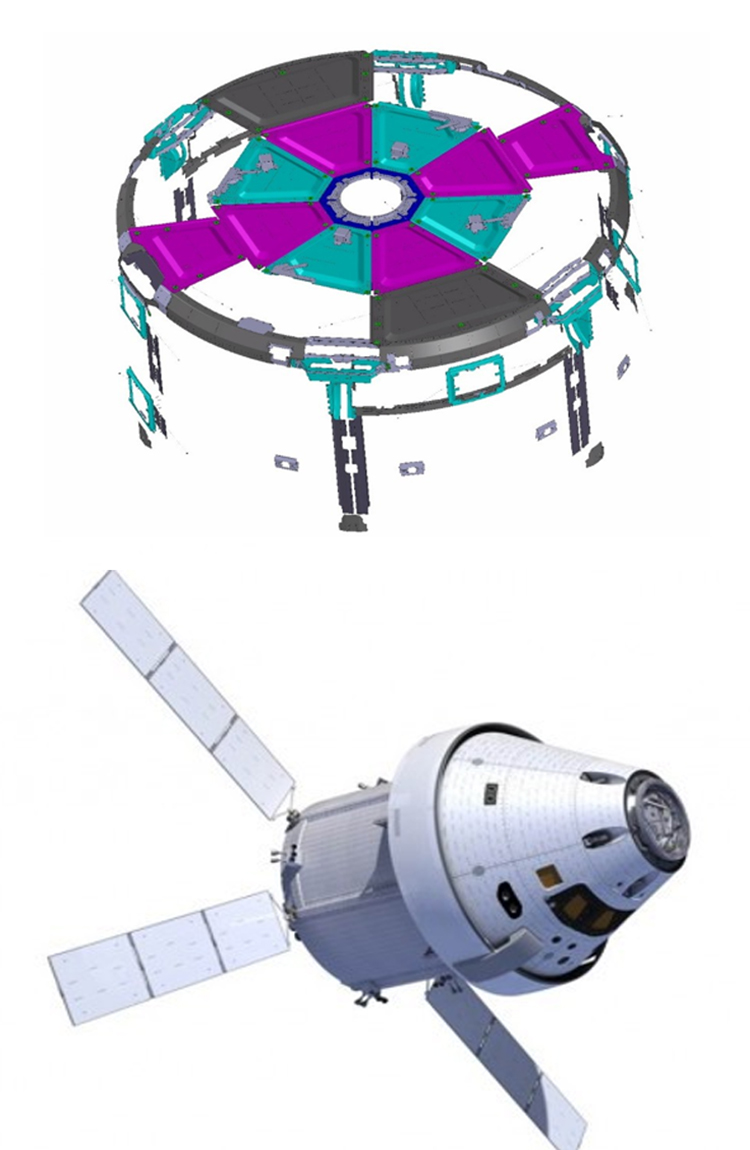
ORION MDPS Project
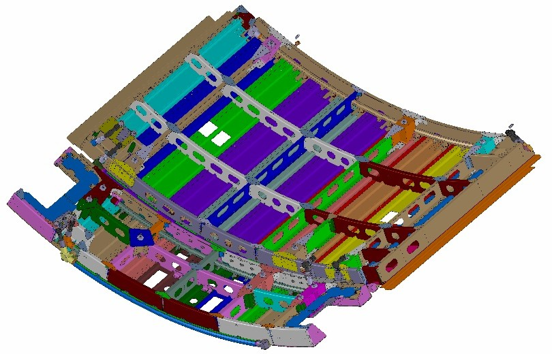
TESI has been working on space missions projects for several years, collaborating with THALES ALENIA SPACE.
In this context, today it is responsible for the industrialization and production of MPCV metal components for the ORION, program, that is the interface system to the human load module.
The technologies applied, all in-house, are the following:
- Light alloys sheet metal forming
- Heat treatments
- Surface treatments according to aeronautical specs
- Detail parts dimensional check with CMM
- Pre-assembling activity
- Detail parts certification.
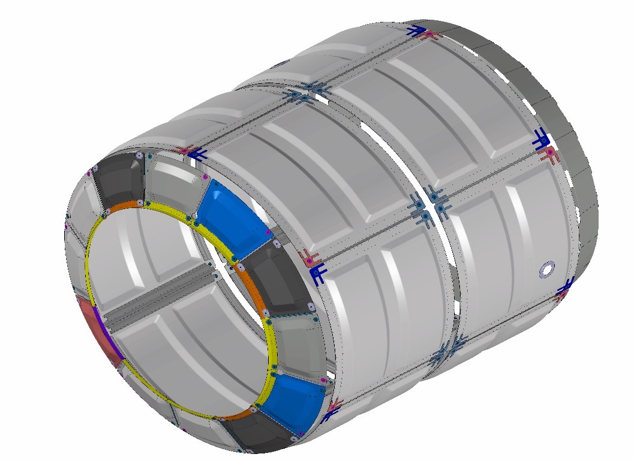
MDPS CYGNUS Project
For the CYGNUS project, we have been producing the MDPS system, since the program was born. This is the external envelopment, consisting of a series of light alloy skins, forming the external barrier of the module. It represents a real anti-meteorite shield. All the parts have been engineered from THALES ALENIA SPACE project and supplied in kits, completed with thermo-optic surface treatments according to specs.
The technologies applied, all in-house, are the following:
- Light alloys sheet metal forming
- Heat treatments
- 3 and 5 axis CNC
- Surface treatments according to aeronautical specs
- Detail parts dimensional check with CMM
- Pre-assembling activity
- Detail parts certification
Bepi Colombo and Ara Frame Project
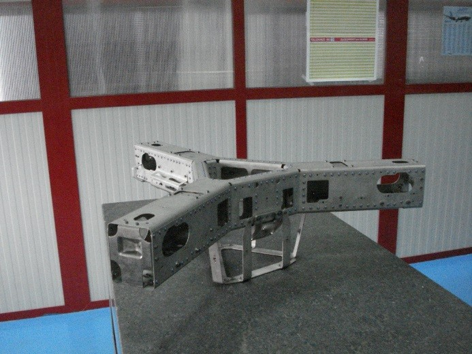
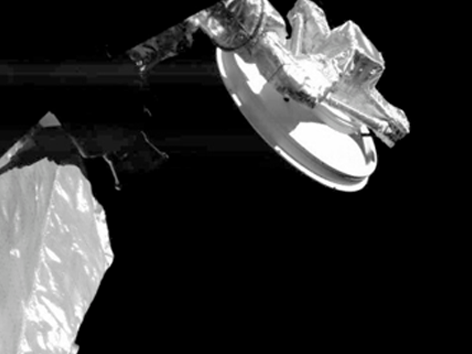
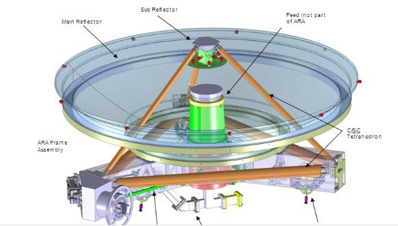
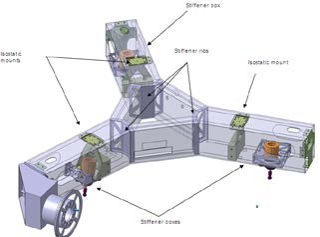
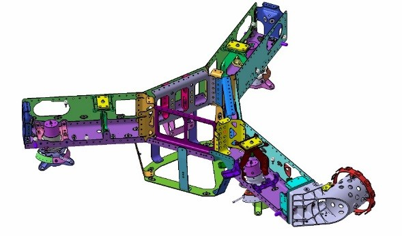
One of the most innovative projects we have participated in, thanks to Thales Alenia Space, is the Bepi Colombo Ara_Frame program,for which we designed and built the titanium support of the antennas.
The activities performed were, starting from a rough drawing, the design and the development and construction of the entire system with the use of titanium components. The target required by the program was to limit the weights, taking in account the required operating loads.
The technologies applied, all in-house, are the following:
- Titanium sheet metal forming
- Heat treatments
- 3 and 5 axis CNC
- Surface treatments according to aeronautical specs
- Detail parts dimensional check with CMM
- Assembling activity
- Detail parts and assy certification.
NEW PROJECTS
MATHSPACE PROJECT
As part of the new ITAL_SAT_GOV program, through the MATHSPACE consortium, we collaborate in the construction of the satellite structure, with the design, productions and validation of the metal parts leaded to the main module.
HAPS PROJECT
TESI presented a research project for the design of a high-altitude platform system with the use of an innovative mixed structure and with an original configuration. The project involves the design of the system and the creation of a scale model for functionality tests.
OPUS 4.0 PROJECT
Through an autonomous research project, TESI is developing an innovative example of a robotic arm for space application. This is a modular system that can be used both for the orientation of satellite thrusters and for the autonomous assembling of components in space. The current schedule is to create a model for functional tests by the end of 2021.